Regional Anesthesia
Interscalene
Supraclavicular
Infraclavicular
Axillary
Lumbar Plexus
Femoral
Sciatic
Popliteal
Ankle Field Block
Epidural
Spinal
Helpful Links
Difficult Airway
Difficult Airway Management—University of Florida
Basic Airway Management—Queens University
Advanced Airway Management—Queens University
Professional Journals
Journal of NYSORA
Journal of Anesthesiology
Anesthesia and Analgesia
Employment
Employment Resources
History of Nurse Anesthesia
- 1844-Horace Wells, a Connecticut dentist began extracting teeth with nitrous oxide.
- 1846-William T.G. Morton demonstrated the anesthetizing properties of ether.
- 1847-James Simpson introduced chloroform into clinical practice for surgery.
- 1853-John Snow administered chloroform analgesia to Queen Victoria during childbirth.
- 1861 thru 1865-Catherine Lawrence and other nurses provided anesthesia for soldiers wounded in the Civil War.
- 1877-Sister Mary Bernard, a nurse at St. Vincent's Hospital in Erie, Pa., is credited as the first identifiable nurse to specialize in anesthesia.
- 1880-The administration of open drop ether and chloroform was taught to Sister Aldoza Eltrich at St. John's Hospital in Springfield, Ill.
- 1889-Edith and Dinah Graham began to administer anesthesia at St. Mary's Hospital in Rochester, Minn.
- 1893-Alice Magaw began working as a nurse anesthetist at St. Mary's Hospital in Rochester, Minn., for Dr. Charles Mayo.
- 1898-First published paper by nurse anesthetist. Alice Magaw described her observations of 1092 patients in the St. Paul Medical Journal.
- 1909-The first hospital-based nurse anesthesia training program was opened at St. Vincent's Hospital in Portland, Oregon by nurse anesthetist Agnes McGee.
- 1909-Florence Henderson published her first article "The Nurse as an Anaesthetist" in the American Journal of Nursing.
- 1914 thru 1917-Hodgins, along with Crile and other nurse anesthetists served in volunteer American medical units that provided anesthesia for casualties during World War I.
- 1915-Hodgins established the Lakeside Hospital School of Anesthesia in Cleveland, Ohio. The first graduating class included six physicians, two dentists, and eleven nurses.
- 1916-Lakeside Hospital School of Anesthesia closed after receiving a letter from the Ohio State Medical Board stating that only registered physicians should be allowed to administer anesthesia.
- 1917-Lakeside Hospital School of Anesthesia reopened within the Medical Practice Act for nurses appropriately educated in anesthesia to administer anesthesia under the supervision of a physician, the first mention of nurse anesthetists or physician supervision in statute.
- 1917-1,100 nurses deployed to Britain and France. The need for pain relief and anesthesia care for the wounded soldiers created an immediate demand for nurse anesthetists' knowledge and skills.
- 1917-Frank versus South lawsuit sought to establish that anesthesia was solely a practice of medicine; however, the Kentucky Court of Appeals ruled that nurse anesthetist Margaret Hatfield was not engaged in the practice of medicine for surgeon Louis Frank's cases.
- 1922-Alice Hunt received an appointment as instructor of anesthesia with university rank at Yale Medical School.
- 1931-Hodgins founded the National Association of Nurse Anesthetists (NANA) in Cleveland, Ohio.
- 1932-NANA was incorporated in Ohio.
- 1933-The first annual NANA meeting, which was held in Milwaukee with 120 attendees; Hodgins was elected honorary president.
- 1934-In the lawsuit, Chalmers-Francis versus Nelson, the California Supreme Court affirmed the superior court ruling for nurse anesthetist Dagmar Nelson who was accused of practicing medicine after physician anesthetists obtained a statement produced by the California Board of Medical Examiners that said anesthesia was the practice of medicine. The NANA filed its first amicus curiae brief for the case. The decision confirmed the legality of nurse anesthesia practice and was considered a victory.
- 1935-Board of Trustees of the American Hospital Association adopted the resolution "…that any legislations that bars, or tends to bar, the use of properly trained anesthetists would be a mistake and a step backwards."
- 1939-NANA was reincorporated as the American Association of Nurse Anesthetists (AANA).
- 1940-The AANA seal with the design "Watchful Care of the Sleeper by the Light of the Lamp of Learning" was adopted.
- 1941 thru 1945-Nurse anesthetists provided anesthesia for the wounded in World War II.
- 1945-AANA administered its first certification exam.
- 1945-Agatha Hodgins died.
- 1946-The first School of Anesthesiology Assembly, an offshoot of the Institute of Instructors of Anesthesiology was held. This would later be called the Assembly of School Faculty.
- 1949-Hunt's test: Anesthesia Principles and Practice: A Presentation for the Nursing Profession, was published.
- 1950-AANA members served in the Korean War.
- 1950-The plan for the accreditation of schools of anesthesia for nurses was approved at the annual meeting.
- 1954-First AANA Code of Ethics was adopted.
- 1954-First Refresher Course was available, a course designed to allow non AANA members with nurse anesthesia experience but without formal training to become eligible for membership.
- 1954-Nurse anesthetist Edward Lyon becomes the first male to be commissioned in the U.S. Army Nurse Corps (AANA).
- 1955-United States Department of Health, Education, and Welfare recognized the AANA as the accrediting agency for schools of nurse anesthesia.
- 1955-AANA became an organizational member on the American Committee of Maternal Welfare.
- 1956-The credential Certified Registered Nurse Anesthetist (CRNA) was adopted.
- 1961-Nurse anesthesia program at Walter Reed General Hospital graduated its first class, consisting of all male graduates.
- 1966-AANA public relations Committee and the executive staff met with American Society of Anesthesiologists (ASA) leaders to explore ways the two associations could collaborate to improve anesthesia service to patients.
- 1971-ASA formally challenged the AANA's right to accredit nurse anesthesia programs.
- 1971-First bachelor's degree program in anesthesia began at Mount Marty College in Yankton, S.D.
- 1972-John Garde, CRNA, became the first male president of the AANA and membership passed 15,000.
- 1973-AANA became a charter member of the Federation of Specialty Nursing Organizations.
- 1974-Standards for Nurse Anesthesia Practice were adopted.
- 1977-Mandatory continuing education for CRNA;s was approved and became effective in 1978.
- 1978-Council on Recertification of Nurse Anesthetists was established.
- 1978-First Master's of Science degree in Nurse Anesthesia; granted from the Kaiser Permanente Nurse Anesthesia clinical Program by the Department of Nursing at California State University in Long Beach.
- 1980-AANA Board of Directors endorsed a minimum of a baccalaureate degree and mandated that nurse anesthesia education should be at the post baccalaureate level by1986.
- 1983-Direct reimbursement legislation for CRNAs was introduced in the Senate.
- 1984-Bahn versus NME Hospitals, Inc,--United States Court of Appeals ruled that under certain circumstances CRNAs working with physicians other than anesthesiologists can compete with anesthesiologists and thus have standing to bring a federal antitrust suit under circumstances prescribed in antitrust law.
- 1984-CRNA Political Action Committee was established to promote and facilitate voluntary contributions from AANA members.
- 1986-Congress passes legislation providing CRNAs direct reimbursement under Medicare Part B, making nurse anesthesia the first nursing specialty/nonphysician group to be granted direct reimbursement rights under Medicare (AANA).
- 1994-First grant awarded to the Council on Accreditation in the amount of $340,000.
- 1996-Task Force on Doctoral Education formed.
- 1997-Foundation began sponsoring a mentoring program pairing CRNA doctoral students with CRNAs holding doctoral degrees.
- 1997-The Health Care Financing Administration of the U.S. Department of Health and Human Services released a proposed rule to defer to the states on physician supervision of CRNAs for Medicare cases.
- 1998-Council on Accreditation of Nurse Anesthesia Educational Programs required that graduates of all nurse anesthesia programs must be awarded at least a master's degree by October 1 of that year.
- 1998-Movement of schools of anesthesia from hospitals to universities was finally accomplished, taking over half a century to fulfill the visions of early nurse anesthesia leaders.
- 2001-Iowa became the first state to opt out of the federal physician supervision requirement.
- 2002-Nebraska, Idaho, Minnesota, New Mexico followed as opt-out states.
- 2002-AANA joined 60 other nursing organizations in Call to the Profession: Nursing's Agenda for Change a cooperative attempt to tackle the nursing shortage.
- 2003-Physician supervision opt out states increased to 11with the addition of Kansas, North Dakota, Washington, Alaska, and Oregon.
- 2003-The study "Surgical Mortality and Type of Anesthesia Provider" was published, demonstrating that surgical death rate is not linked to provider type.
- 2004-A Minnesota lawsuit was instrumental in bringing about considerable regulatory changes regarding anesthesia reimbursement and successfully resolved the legal actions that had been pending against hospitals and anesthesiologists in the Twin Cities and St. Cloud regarding wrongful termination of nurses, antitrust violations and Medicare fraud.
- 2004-AANA and ASA entered into a mediation process to help improve communication between the two organizations.
- 2004-Montana opted out of the federal physician supervision requirement.
- 2005-South Dakota and Wisconsin opted out of the federal physician supervision
Schultz H, Wood J, Woodard C. A Historical Review of the Nurse Anesthesia Profession. Wichita, KS: Newman University. 2009.
Start Your Radiologic Technology Degree Today
Applications for the Fall class will be accepted January 1st through March 1st. Applications will be accepted after March 1st as space allows.
If you are currently a Newman student, please skip Step 1.
Step 1
If you are not a current student you will need to create an account and submit an undergraduate application to the University and then proceed to Step 2.
Step 2
Once you have submitted an undergraduate application to the University (or if you are already a Nemwan student) you will need to create a new application for this program. Select the Specialized Program application in the undergraduate section.
Program Requirements
In addition to a college GPA of 2.75 or better, applicants must have completed or be currently enrolled in the following college courses (or equivalent) before applying to the Radiologic Technology Program. If currently enrolled, they must be completed by the end of the Spring semester prior to entering into the Program starting in the Fall.
- Human Anatomy and Physiology (with lab)
- College Algebra
- College Writing I
- Medical Terminology
- Oral Communication
- College GPA of 2.75 or better
Prerequisite coursework must be passed with a “C” or better.
The following courses are required for the associate degree (see University catalog) and must be completed to graduate from the program. If taken at NU during the professional curriculum, the courses must be taken during specific semesters to avoid conflict with clinical instruction.
- Theology
- Philosophy
Application Criteria
- Acceptance to Newman University.
- Completed courses (or be currently enrolled) in Human Anatomy and Physiology, College Algebra, Medical Terminology, Oral Communication and College Writing I at Newman University or another acceptable institution.
- All official official transcripts confirming GPA of 2.75 or better and demonstrate prerequisite coursework completion or current enrollment.
Students will be selected for acceptance from the following criteria:
- Those who have fulfilled the admission requirements by the deadline
- Scores derived from their cumulative GPA
- Prerequisite grades
- Application information
- Essay
An interview will be offered to those applicants whose scores are satisfactory from the above criteria. Interview appointments will be assigned in the month of April, after the application deadline. A letter of acceptance, alternate status, or denial to the program will be sent to the applicants after all interviews are completed.
Applicants being interviewed will be required to complete a healthcare assessment test on the day of the interview.
Students accepted for admission are required to confirm their intention to attend the program in writing within 10 business days after notification. Acceptance is conditional upon completion of all requirements including but not limited to: all pre-requisite courses completed with a "C" or better, successful completion of background check, physical, and drug screen. Should the background check disclose adverse information, the school may remove said student from the program.
Alternates will be selected if openings occur according to numerical ranking.
Non-Discrimination Notice
The Newman University Program of Radiologic Technology does not discriminate on the basis of race, color, creed, sex, religion, age, national origin, marital status, handicap or disability, veteran status or any other classification protected by local, state and/or federal laws. For further information, see the non-discrimination notice published in the University catalog.
Rev. 18
NOW ACCEPTING APPLICATIONS!
- Application Deadline: Tuesday, March 17, 2026. Program will be filled as applications are received, so apply early!
- Dates/Times: NSEP meets for 8 weeks on Tuesdays & Thursdays from 4:00-5:45 PM starting March 24, 2026 and ending on May 14, 2026.
- Location: State-of-the-art Bishop Gerber Science Center located on the Newman University campus in Wichita, KS.
- Cost: Free! This includes a tuition waiver for two hours of college credit!
NSEP is designed to encourage high school students, especially first generation and low-income students, to explore and investigate the possibility of a career in a science, technology, engineering or mathematics (STEM) field. Each participant will:
- Earn 2 hours of free college credit with a pass/fail grade upon successful completion of the program
- Attain hands-on experience conducting faculty-led STEM laboratory experiments and activities
- Perform group and individual analysis of experiments
- Learn from college faculty through engaging demonstrations
- Engage with guest speakers from a variety of STEM-related fields to discuss the career opportunities possible with a STEM education
- Experience college life as an authentic Newman University student including the privileges of a student ID
What do NSEP participants have to say?:
"I liked NSEP because I participated in hands on activities, I talked to people working in STEM-related fields, as well as college students"
"I liked doing the labs because they helped me improve my critical thinking skills and my lab work in school."
Details
Dates/Times: NSEP meets for 8 weeks on Tuesdays & Thursdays from 4:00-5:45 PM starting Tuesday March 24 and ending on Thursday, May 14.
Location: State-of-the-art Bishop Gerber Science Center located on the Newman University campus in Wichita, KS.
Cost: Free! This includes a tuition waiver for two hours of college credit!
Newman University is proud to have the generous support of Evergy as sponsors of the Newman STEM Exploration Program.

Who can apply?
Any high school sophomore, junior, or senior who has completed at least one high school science and math course. Consideration may be given to freshmen.
You do not have to be committed to a STEM-related career to attend NSEP.
How to Apply:
Complete the Online Application- Completed applications will be reviewed as they are received and spots will be filled on a first-come-first serve basis. Limited spots available!
- All application materials must be received no later than March 17, 2026
NSEP Participating Faculty
- Ryan Huschka, Ph.D. - Associate Professor of Chemistry
- Alan Oberley, Ph.D. - Associate Professor of Chemistry
- Sumia Ehsan, Ph.D. - Assistant Professor of Chemistry
- Tomoko Bell, Ph.D. - Assistant Professor of Biology
- Daryl Goad, Ph.D. - Assistant Professor of Biology
- Kelly McFall, Ph.D. - Professor of History
Newman University Philosophy on STEM Exploration
The Newman University mission of producing graduates who will transform society is grounded in our commitment to provide education experiences and create career opportunities for all students. The Newman Stem Exploration Program (NSEP) is designed to reveal for students the value and wonders of STEM areas in both the classroom and daily life. The hands-on investigative experiences and guest speakers are designed to encourage students to explore their interests and investigate the possibility of a career in the science, technology, engineering or mathematics (STEM) fields.
With these classes being on a college campus, NSEP hopes to make students more comfortable with the idea of attending college and make it a positive and familiar experience.
NSEP strives to prepare scientifically literate students who nurture dreams of higher education and ultimately professional success.
Objectives of NSEP
- To make STEM areas a fun and exciting opportunity through a variety of demonstrations, lab activities and guest speaker presentations designed to expose participants to a variety of career opportunities and foster their interests in all STEM areas.
- To increase students’ appreciation of the relevance of STEM fields and to build their interest and confidence in learning STEM-related concepts.
- To help students foster independent scholarship, originality and competence in STEM related areas.
- To broaden participants’ scientific interests and inform students of the need and opportunities in all STEM-related careers by providing creative and meaningful career-related on-site visits and experiences with current STEM professionals.
The program will attempt to track participants’ continued enrollment in high school, academic progress in STEM areas, graduation from high school and acceptance to an institution of higher education.
Questions? Contact:
Ryan Huschka, NSEP Director
Associate Professor of Chemistry
Newman University
3100 McCormick
Wichita, KS 67213
Phone: 316-942-4291 x 2428
E-mail: [email protected]
The Honors Program at Newman University empowers high-achieving students to transform society. Together, we build a strong community, hone our academic skills, learn more about our earth and the people on it, engage with the world outside Newman's campus, and link current students with honors alums and future honors students. Our graduates become active citizens, succeed in their careers, and leave their world a little better than they found it.
What You'll Gain
Honors opens doors you didn't know existed.
Sharper Thinking
Dive into discussion-based seminars that challenge you to analyze, question, and articulate your ideas with confidence.
Graduate Edge
Signal to employers and grad schools that you're among the very best. Get personal help with applications and fellowships.
Faculty Mentorship
Build real relationships with professors who know your goals and guide your academic journey one-on-one.
Broader Horizons
Engage with guest speakers, travel opportunities, and service projects that connect you to the world beyond campus.
Lifelong Network
Join a community of interesting, curious people—current students and alumni—who become colleagues and friends for life.
Leadership Growth
Step into roles that build your confidence and résumé, from organizing events to mentoring incoming students.
Alumni Voices
The Honors Program inspires intellectual curiosity that transcends any particular industry or career path. The Honors Program encouraged me to hone my skills as a critical thinker, researcher, and writer, which has not only helped me thrive in my career but also enriched so many life experiences. I cannot recommend this program enough to prospective students.
The Honors Program allowed me to easily transition into "college life" and connect with a group of people who quickly became some of my closest friends, one of whom is now my fiance. It taught me many important skills, including, but not limited to: balancing workloads, adapting to new situations, taking the perspectives of others, and smuggling ancient weapons of war across international borders. All these skills, except perhaps the last, have been very important for me, as I continue to use them daily.
Common Questions
Eligibility & Applying
I didn't earn a 3.8 GPA in high school. Can I still be part of the program?
Can Transfer students participate in the program?
I'm planning on getting an associate's degree. Is honors right for me?
Academics & Workload
Is it more work?
Will honors delay graduation?
What is different about honors courses?
What is an Honors Option?
Can I handle honors if I'm in a demanding major like nursing or biology?
Life & Activities
Can athletes succeed in the Honors Program?
Can I study abroad and complete the Honors Program?
What kinds of outside events do Honors Students participate in?
Program Details
How much does it cost?
Does the Honors Scholarship stack with other scholarships?
Do you have to keep a certain GPA to stay in the program?
What happens if I start the program and it's not the right fit?
Learn More
Questions? Let's talk.
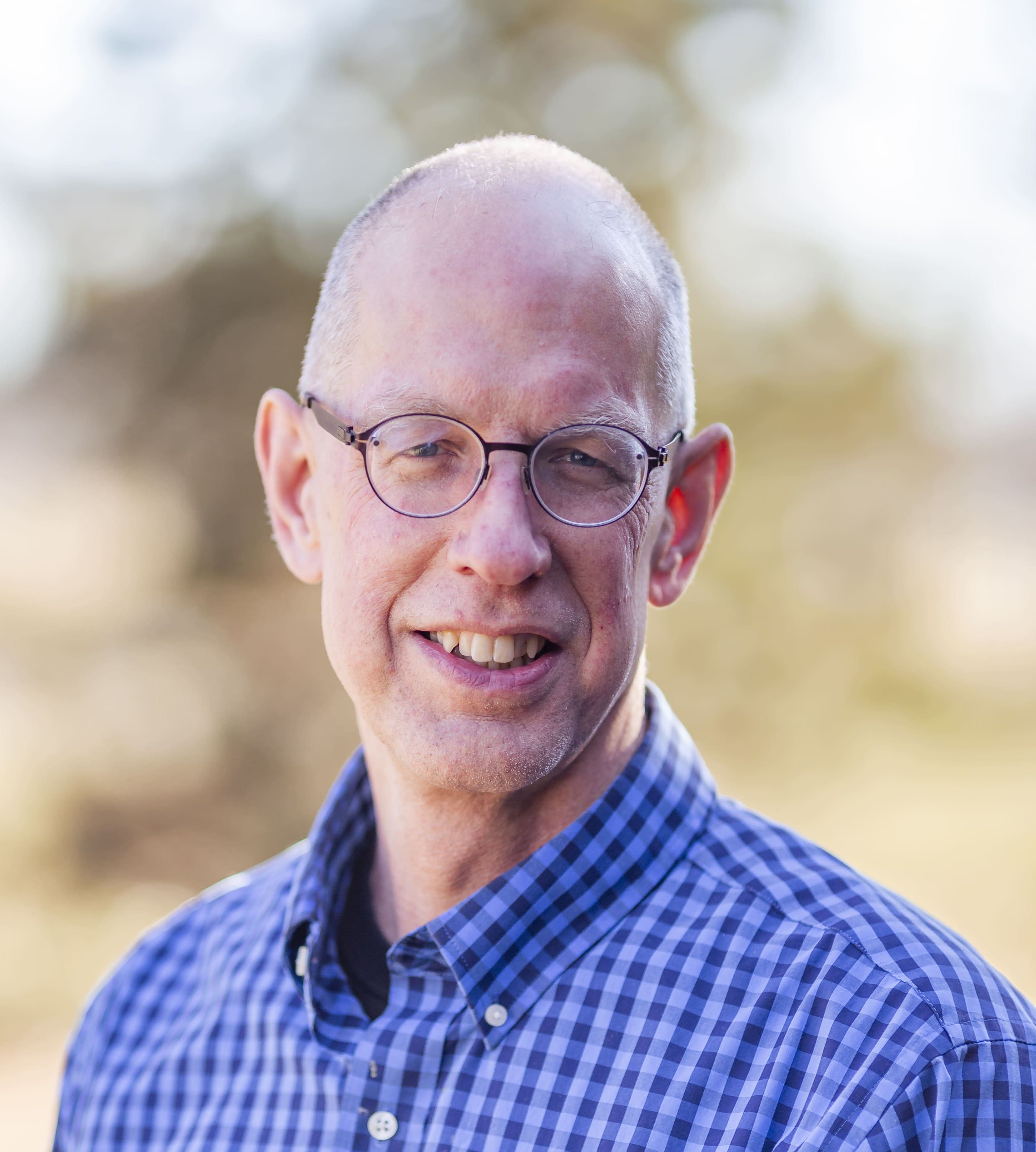
Dr. Kelly McFall
Director, Honors Program
Email Dr. McFallAre you ready to turn your passion for helping others into real-world action? Our program offers a unique approach that goes beyond textbooks and lectures. With a focus on field education, we're here to help you cultivate the practical skills, values, and knowledge essential for a successful career in Social Work.
Why Our Field Education Sets Us Apart:
- Dynamic Learning: We understand that true growth happens when you put theory into practice. Our innovative field education program ensures that you don't just learn about Social Work – you experience it firsthand. From internships in Wichita to our expanding online opportunities, you'll gain invaluable insights that can't be found in a classroom.
- Tailored Experiences: When you're ready for Practicum Field Placement, we're dedicated to finding the perfect fit for you. We believe that your interests and strengths should drive your experience. Through close collaboration, we'll match you with a placement that aligns with your goals, so you can make the most of your journey.
- Mentorship and Guidance: Our experienced faculty members are more than educators – they're mentors. By getting to know you and valuing your voice, they'll support and guide you as you navigate the complexities of becoming a social worker. Your development is our priority.
- Diverse Pathways: The field of Social Work is vast and varied. Our community partnerships offer an array of practice areas, exposing you to a spectrum of opportunities. Whether it's working with social service agencies or exploring new placements, we're committed to expanding your horizons.
- Empowering Community: Step into the School of Social Work, where a supportive community of peers awaits. We're here to foster connections, inspire collaboration, and encourage you as you embrace the challenges and rewards of real-world social work.
Discover a program that transforms education into action, theory into practice, and passion into purpose. Join us in the Bachelor of Social Work Program and embark on a journey that will empower you to create lasting change. If you have questions or want to learn more, feel free to drop by or send us a note. Your journey towards a meaningful career starts here.