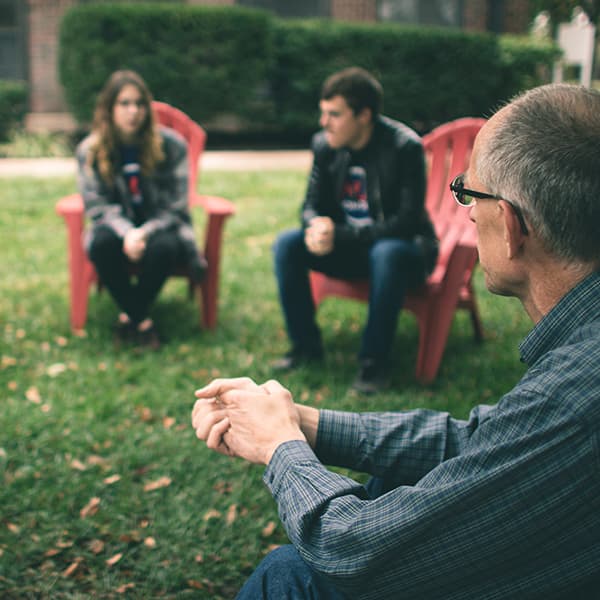
The School of Education seeks to inspire and encourage students to become caring, reflective practitioners who are intellectually, emotionally, and spiritually motivated to transform self, schools, and society.
NU GRADUATE PROGRAM GOALS
Graduate programs in the School of Education reflect what is fundamental in the Conceptual framework of Newman University. This is to provide
preparation that will enable education students to assume leadership roles. This means developing knowledgeable educators who are leaders and educational leaders who understand curriculum, students and teaching methods. Helping students prepare for teaching necessitates
program attention to the six areas of the Newman University School of Education Conceptual Framework.
NU CONCEPTUAL FRAMEWORK
In fulfilling this mission and goals, the students who complete programs in the Newman University School of Education will be:
- Knowledgeable educators who engage in critical thinking, possess basic quantitative skills, and communicate effectively. Graduates will also be acquainted with the major concepts and structures of their disciplines, with how individuals learn, with instructional and assessment strategies that ensure continual development of learners, and with the integration across content areas and technology to enrich curriculum and enhance instructional practices.
- Caring educators who are concerned about the whole person, in self and in others; who demonstrate responsibility to the community and society; who respect the dignity of every person by creating instructional opportunities that are equitable for all learners; who listen carefully and seek to understand and do what is just; and who make ethical decisions.
- Reflective educators who are perceptive, curious, discerning and who use good judgment; who evaluate the effects of their choices; who understand the historical, philosophical, and social foundations of education that guide educational practices; who exhibit life-long learning.
- Visionary educators who collaborate with other s to transform; who use data, research and best instructional practices to achieve a virtuous learning community; and who use assessment strategies to ensure the continual development of all learners.
- Collaborative educators who value collegial relationships as well as the knowledge and insights acquired from them; who respectfully listen to others; who seek to join others in fostering active inquiry and supportive interaction in the classroom; who work to transform and to improve schools through instructional strategies focusing upon improved learning for all students.
- Ethical educators who embody goodness, integrity, truth, justice, and compassion as well as employ a moral and ethical framework in decision-making; and whose decisions are crafted in the pursuit of the common good, which includes advancing the causes of peace and justice.
Over the past twenty years, Coelacanth (See-la-canth) (formerly known as the Sheridan Edwards Review) has grown from a small, photocopied, in-house project to a professionally produced literary journal. Winner of a number of national awards, including five from the Rocky Mountain Collegiate Media Association, the journal has been a springboard for many student writers such as Kristen Bomhoff, James Love, Aaron Leis, Michelle Parrish, Anna Perleberg, Phil Seuper, and Rebekah (Baldridge) Valentine, all of whom have gone on to publish in or become editors for other magazines.
Coelacanth offers two annual literary prizes–the Sister Madeleine Kisner Prize in Poetry and the Jeanne Lobmeyer Cárdenas Prize in Short Fiction–which are judged by nationally known writers. Past judges have included Doris Betts, Bruce Bond, Scott Cairns, Albert Goldbarth, Jeanine Hathaway, Paul Mariani, Christopher Moore, Virginia Stem Owens, Vicki Santiesteban, Tim Seibles, Richard Spilman, Jeanne Murray Walker, Marge Simon, and others.
Submissions
Coelacanth accepts undergraduate student submissions year-round by regular mail and by e-mail. The journal is published annually each Spring. Short stories, poetry, short plays, and creative nonfiction manuscripts should be sent to Coelacanth at the following address:
Coelacanth
[email protected]
Admissions Criteria
What are the Admission Criteria?
The admission criteria and application process can be found on the MSW-Application Process page.
Are there any prerequisite courses?
No.
What qualifies an applicant for advanced standing admissions?
Applicants with a Bachelor of Social Work degree from a CSWE-accredited program can apply for Advanced Standing.
Do any undergraduate courses count towards the MSW Degree?
No.
What if I do not have a 3.0 GPA?
Applicants not meeting the minimum GPA requirements for unconditional admissions may still be considered for admission with other evidence of ability to complete the program of study. Contact the MSW Program Director, Yelando Johnston at [email protected] for specific details and options.
Is the GRE or interview required?
No. However, interviews and the GRE are sometimes used selectively when applicants do not meet the minimum admission requirements.
Am I required to have work experience?
No.
Application Process
How do I apply?
Click on the following link to access the application process page: MSW-Application Process page.
When can I start the program?
Students admitted to the Foundation Program are able to start the MSW program in the fall semester. Students admitted as Advanced Standing (applications having earned a BSW degree from a CSWE-accredited program) are able to start in either the summer or fall semester. No students can start during the Spring semester.
What are the application deadlines?
To allow sufficient time to have your application reviewed and for the best field placement, applicants should apply, and submit all supporting documents by the application deadline. The application deadline is based on starting semester and full-time or part-time standing.
Advanced Standing
Undergraduate degree in social work from a program accredited by the Council of Social Work Education (CSWE).
Full-time/Part-time, Summer Semester: April 30
Full-time/Part-time, Fall Semester: July 31
Foundational Standing
Undergraduate degree in a major other than social work.
Full-time, Fall Semester: April 30
Part-time, Fall Semester: July 31
Note: Applicants who have not completed their undergraduate program are still invited to apply to the Newman University MSW program. If accepted, admission may be conditional for receipt of an official transcript showing the completed undergraduate degree.
Can I transfer graduate credit from another graduate Social Work program?
Yes. A maximum of 6 graduate credit hours may be transferred from other CSWE-accredited institutions. Transfer credit hours are also at the discretion of the MSW Program Director and the Dean.
Are the forms provided the only acceptable format for the letter of recommendation?
Yes.
Tuition and Financial Aid
What is the cost of attendance?
Click here for the link for tuition and fee information. Click here for financial aid information.
How many credit hours must be enrolled in to qualify for financial aid?
Enrollment in a minimum of 6 credit hours is required for the Fall and Spring semesters and is considered full-time for graduate students. (For the summer semester, enrollment in at least 3 credit hours qualifies for financial aid).
What financial aid is available? Are there any scholarships?
Unsubsidized federal loans are available, up to a maximum of $20,500 per academic year. Graduate Plus loans may also be available. Check with the Newman University Financial Aid office (316-942-4291, ext. 2103) for additional information. Scholarships are not available through Newman University.
How do I apply for federal financial aid ( A Stafford Student Loan)?
A student will need to complete the FAFSA (Free Application for Federal Student Aid) at https://studentaid.gov/h/apply-for-aid/fafsa. After Newman has received the FAFSA, an award letter will be mailed to the student or will be available to accept online through your student account. First-time borrowers will need to complete two online forms at www.studentloans.gov which are the Master Promissory Note and Entrance Counseling.
If my employer provides tuition reimbursement, what do I need to do?
Newman University offers a tuition reimbursement policy that allows you to delay all or a portion of your tuition payment. Click here to review the policy information and instructions.
Does Newman University offer payment plans?
Yes. Students may enroll in a monthly payment plan through NBS e-Cashier Automatic Payment Program. The following is a link to information on the payment plan program: Newman Payment Plan Information.
Does Newman offer any scholarships for Social Work students?
No.
Program Structure and Format
How many credits does it take to complete the program?
Advanced Standing Program
34 credit hours of coursework, which includes 10 credit hours of fieldwork and related integrative seminars.
Traditional Program
62 credit hours of coursework, which includes 20 credit hours of fieldwork and related integrative seminars.
How long do I have to complete the program?
Six years.
Are classes offered online or on-campus?
The Newman University MSW program is offered at the Wichita main campus and beyond through our MSW program.
What does the course school look like?
Click here for the Traditional Program. Click here for the Advanced Standing Program.
Where can I find a course schedule?
Course schedule information coming soon.
How long does it take to complete the Program?
Advanced Standing Program
Full time: 1 year over 3 continuous semesters
Part-time: 2 years over 6 continuous semesters
Traditional Program
Full-time students: 2 years over 5 continuous semesters
Part-time students: 4 years over 11 continuous semesters
How long do classes last?
All classes are 16-week semesters. On ground or hybrid classes typically meet once per week, for three hours. Online classes are asynchronous.
Where can I find course descriptions?
Link to online course catalog: View Social Work course requirements and descriptions online.
What does the Newman Social Work program offer that others don't?
Newman University offers students a rigorous, supportive, and individualized education. The social work program offers several unique features that set it apart from other programs.
Trauma-Informed Focus: Newman University's social work program have a strong emphasis on trauma-informed practice.
Concentration electives: Students can choose to focus in clinical social work, administrative - nonprofit social work, and school social work, in addition to trauma informed practice.
Community Engagement: Newman University's social work program prioritizes community engagement and practical experiences. Students may have opportunities for field placements and community-based projects that allow them to apply their knowledge and skills in real-world settings.
Small Class Sizes and Supportive Environment: Newman University's social work program offers small class sizes, allowing for personalized attention and mentorship from faculty.
Emphasis on Inclusivity and Cultural Competence: The program prioritizes inclusivity and cultural competence, equipping students with the skills to work effectively with diverse populations.
Values-Based Education: The program provides a values-based education that integrates ethical principles and social justice values into the curriculum
What are the options for pursuing the MSW while continuing work?
Part-time study is available for both Traditional and Advanced Standing students. Most courses are offered in the evening in addition to conventional academic hours, to meet the needs of working students.
Is the program accredited?

THEO 6713 Christian Rome is an opportunity for you to end your program of graduate study in theology by visiting the sites of the early Church in the Eternal City of Rome. Christian Rome is offered during the second summer session of the program and is intended as the ultimate capstone course! Nothing makes the history of our faith come alive more than visiting the real places where the early Saints and Martyrs gave their lives in witness to Christ. Visit the majestic basilicas of Sts Peter and Paul, marvel at the artistic treasures of the Vatican, pray at the tombs of the early Martyrs and Confessors. Taking a class in Rome is a once in a lifetime opportunity!
THEO 6113 Lands of the Bible consists of a personal experience of holy sites such as Galilee, Jerusalem, and Bethlehem. Students are afforded the opportunity to pray at the very places where the drama of salvation unfolded, including Mass with the local Hebrew speaking Catholic community and the Stations of the Cross on the Via Dolorosa. The students also prepare a presentation or lesson to share the fruits of this experience in a classroom or parish setting. In anticipation for the pilgrimage, students participate in a few live meetings together, as well as a series of guided discussions over assigned readings.
These courses can be taken for credit towards the MTS degree and by MAT students as auditors. The courses are typically offered on alternating years.
Why did you decide to get a Masters in Theology? Why did you choose Newman to complete your degree?
I chose to earn a Masters in Theology for the only appropriate reason I can imagine: because I knew God was calling me to. My family and I chose Newman University through prayerful discernment while being attentive of God’s sign, .i.e., the Lord called us to Newman, the fruit of which was the blessing of the St. Maria de Mattias Endowment Scholarship.—Justin Steele
When we quit learning we die! This was an opportunity to deepen my faith and take my understanding of Catholicism to a new level while enjoying the challenge of learning new ideas. Given my work schedule this was not an endeavor I would have started in a traditional university setting. Newman’s use of online classes for the entire master’s program made all the difference.—Pat Hanrahan
I’ve received so much more from the program than I ever thought I would. My teaching is so much more in depth and I learned, through the program, how to interconnect many of the teachings of the Church with biblical stories. Students enjoy my classes more and they leave comprehending scripture and Church History at a higher level. I’ve had many students return telling me that they impressed their high school religion teacher by knowing something that everyone else didn’t.—Jessica Loney
Having finished your degree, was it what you expected?
It was more than expected. The computer modules worked far better than I thought and in fact were very beneficial as one could review them over and over if needed. –Pat Hanrahan
It was essentially what I expected. Although it involved an extensive amount of reading, writing, and interaction with my fellow theology students, when it was over, I was happy to have reached my goal but sad that the program was ending. Of course, my master’s degree enabled me to begin self-education at a much higher level that would have been possible without the degree.—Chris Riggs
What specifically about the program did you find the most enjoyable? What was your favorite class or subject in the program?
I really enjoyed the discussions on blackboard and our once-a-class weekends. I found having an exchange of ideas with other students to further my understanding of our reading assignments. I enjoyed the classes on moral theology, the Eucharist, and the Church.—Jackie Arnold
It’s hard to beat the opportunity to visit Rome, but every class was special in its own way. You never knew whether you’d be watching scenes from “Gran Torino” during an online presentation, debating the morality of a complex situation, or writing song lyrics with your fellow students. The material was always relevant, and it was exciting and entertaining to see what was coming next.—Susan Corcoran
I especially enjoyed the writing aspects of the program, that is, the on-line threaded discussions that were based on a different topic each week, and the various papers we wrote for each class. The threaded discussions provided many opportunities to explore, discuss and sometimes debate the theological perspectives of our classmates, and the papers I wrote provided opportunities to delve into areas of interest that I had not previously explored in any depth. The net result from both of these aspects of the program was the opportunity to do a lot of creative thinking and to learn many new things along the way.
I cannot name a favorite class or subject because I have a strong interest in just about everything that we covered in the program.—Dick Landkamer
How has the degree changed your understanding of Catholicism?
One of the most profound ways I feel the program influenced my understanding is that it taught me not to be afraid to question various aspects of the faith or to examine other beliefs in relation to Catholicism. On my own, I would never have picked up something written by the Gnostics or the New Atheists but it is important to understand their position so I can more effectively defend the Catholic faith against them when necessary. Truth will always stand up to scrutiny! Another important matter that we spent quite a bit of time discussing was how there is room for many different viewpoints to fit into the Catholic faith. The doctrines of the Church often do not tell us specifically what we must believe so much as they set boundaries that allow for a range of ideas. So often people accuse Catholicism of being just a series of rules, and I think this more inclusive understanding is something that really needs to be spread, especially now as the New Evangelization movement gains momentum and we continue to work toward unity amongst all people.—Susan Corcoran
Would you recommend this degree to others?
Absolutely yes, and I have recommended it to many people. I would recommend it to a wide range of interested learners because it offers the opportunity for a wide range of experiences. This program, like so many things, gives back to you to the degree that you invest in it. I put a ton of time and effort into my studies, and was greatly rewarded. I was at a time in my life where I was able to make that commitment of time and energy. But for those who cannot make that investment, this program is still workable for them as well. One example of this is the option of either the MTS degree or the MA degree, which has several other major requirements and takes an additional semester to complete.—Dusty Gates
If you want to gain quality in your spiritual life, learn the foundations of Christianity and Catholicism and gain new friendships in your cohort then yes by all means enroll.—Pat Hanrahan
Absolutely! In fact, I have already been approached by other members of my parish who have expressed an interest in it.—Susan Corcoran
I have recommended this degree to others, and will continue to do so. I think that an important element of the New Evangelization is for Catholics to become much more knowledgeable about their faith. This degree is one way that people can deepen their knowledge of the faith, and it is also a way in which they can gain the ability and confidence needed to teach the faith to others.—Dick Landkamer
How are you using your degree today?
I would like to think that I am primarily using my degree in my vocation as a father and husband. Whenever we learn more about our faith and make progress in our spiritual lives, we are able to, and called to, share those fruits with our families. I believe my prayer during and after this program has helped me live out my vocation more in accordance with God’s will, and made me more able to pass on that faith to my family in my words, deeds, and example. Secondarily, I have had many opportunities to use this degree in my professional ministry as I have worked for the Diocese of Wichita in several educational positions over the past years, currently serving as the Assistant Program Director and Director of Adult Education at the Spiritual Life Center. –Dusty Gates
I am using my Masters in Theology degree today as a full-time Youth Minister and Coordinator of Religious Education for grades 7-12 at a parish in Medford, WI. I am also using my degree as an Executive Director of a religious publishing house Light Of Christ Press that I founded to publish my theological books and of others.—Justin Steele
I teach at St. Mary Catholic School and I am in charge of teaching 6th grade Catholic Doctrine and 8th grade Church History along with instructing Kindergarten and 2ndgrade music. I interweave what I have learned into all of these subjects. Outside of the school, I direct the St. Mary Adult Choir and select music for the choir to sing that corresponds with the Sunday scriptures. Someday, I hope to find a position as a music liturgist and lead a church in all of their music planning and singing groups along with advising families on selecting music for weddings, funerals, and other occasions. –Jessica Loney
I teach various classes for adults through the Spiritual Life Center and the diocesan speaker’s bureau, also the Regan Institute and staff retreats for schools. I hope to start adjunct teaching at some local colleges. I also use it daily with my family and in my work as a catechist at our parish.—Jackie Arnold
My motive was never to use the degree for any professional use. I use my degree each time I hear a scripture read. This degree has trained me to listen differently and hear the real meaning the words convey.—Pat Hanrahan